A monitoring platform that keeps European data in Europe
Six monitoring tools most teams buy separately — uptime, API checks, recorded browser flows, visual regression, sitemap scanning and heartbeats — behind one dashboard, one alert engine and one on-call chain. Built and operated by us, hosted entirely in the EU.
- Tools in one suite
- Six
- Pages per full-site scan
- 500
- Fastest check interval
- 60s
- Data residency
- EU only
The situation
Small teams running real revenue online are told to assemble their monitoring from four or five subscriptions that do not talk to each other: one for uptime, another for browser tests, another for visual diffs, another for cron heartbeats. Each has its own alert rules, so an incident arrives as four unrelated notifications and nobody knows which one matters. And nearly all of them ship the data to a US cloud, which is an awkward conversation for a European company with a GDPR posture to defend.
What we did
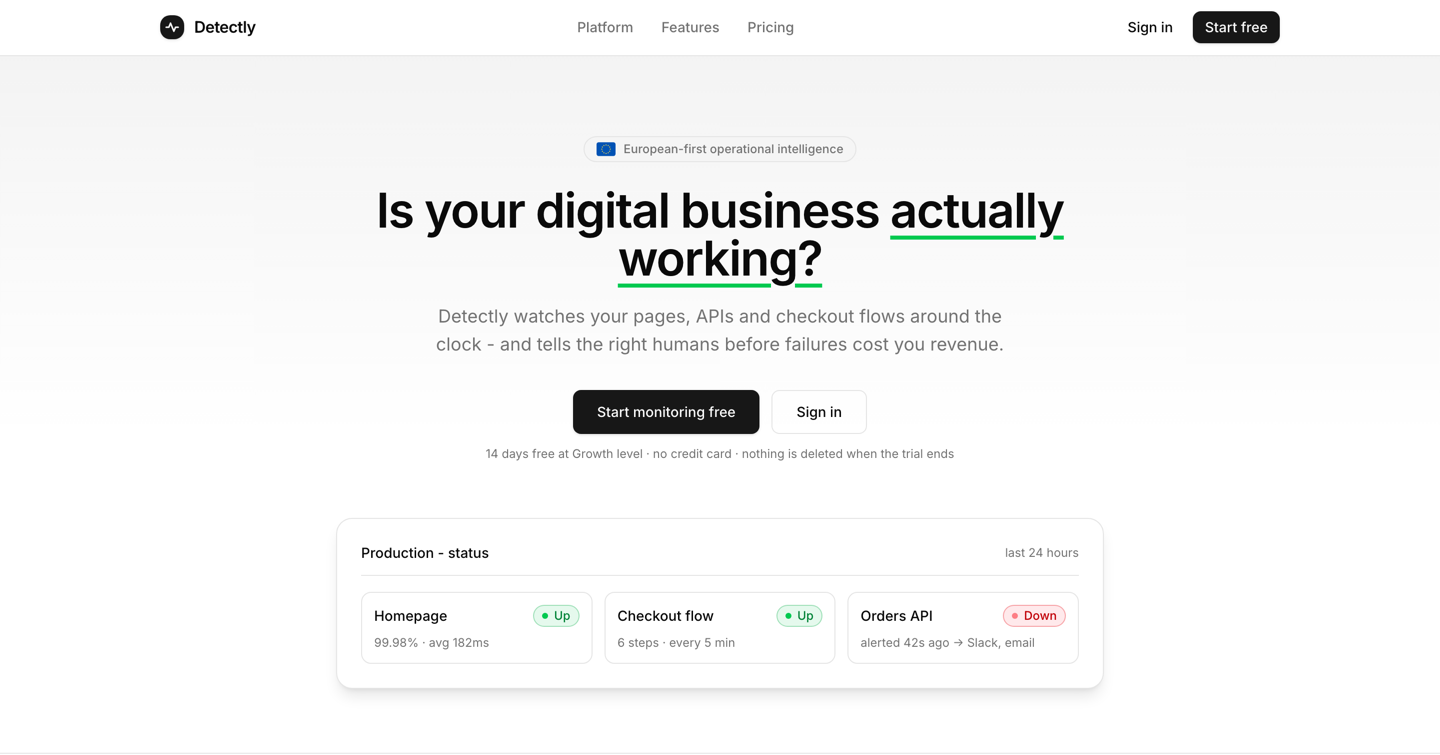
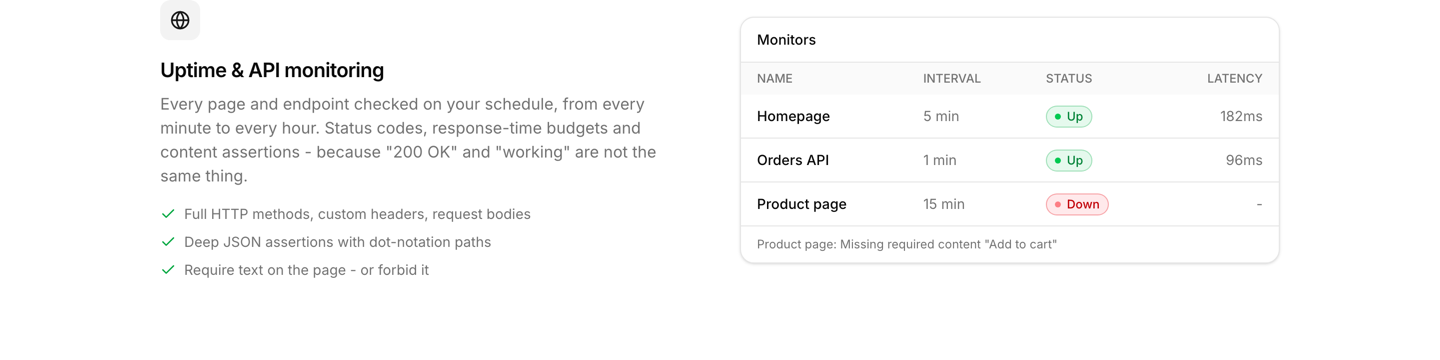
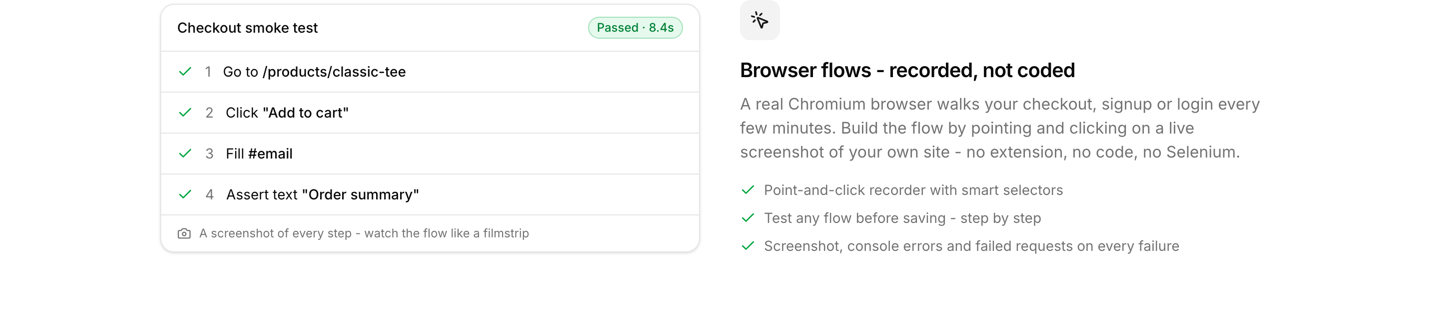
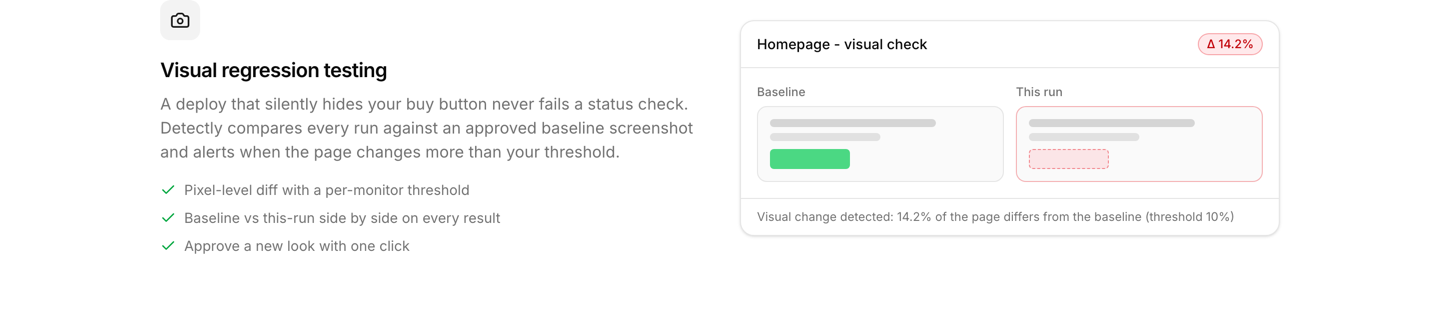
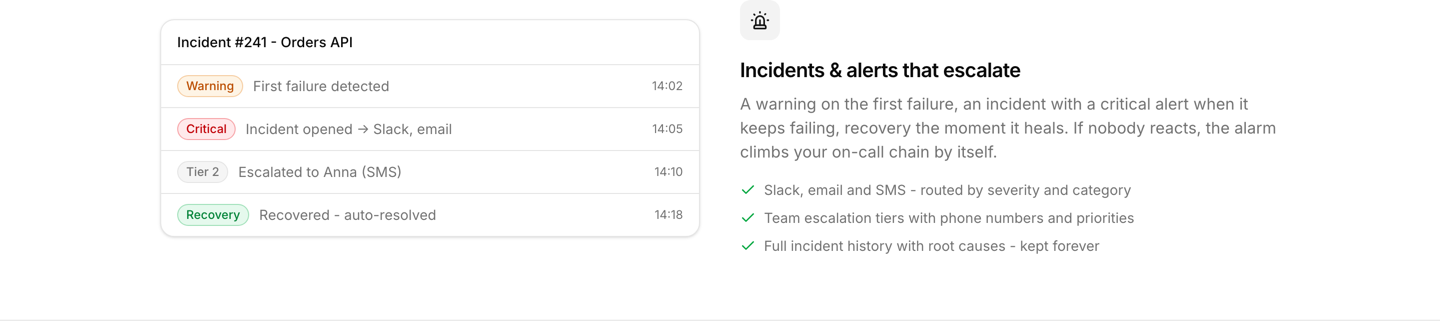
One suite, one alert engine, one on-call chain. Checks run from every minute to every hour and assert on more than a status code: response-time budgets, deep JSON assertions with dot-notation paths, and required or forbidden text on the page — because "200 OK" and "working" are not the same thing. Browser flows are recorded by pointing and clicking at a live screenshot of your own site rather than written in Selenium, and a real Chromium walks the checkout every few minutes, keeping a screenshot of every step. Visual regression compares each run against an approved baseline, because a deploy that silently hides the buy button never fails a status check. Alerts escalate on their own: a warning on first failure, a critical incident when it persists, then up the on-call tiers if nobody reacts. All of it runs on Hetzner in Germany — an architectural decision taken up front, not a compliance addendum bolted on later.
Where it landed
Detectly is live and selling, from €49 a month for a single site to unlimited monitors on the top plan. A new workspace is watching its first page within a minute of signing up, full-site scans cover up to 500 pages, and monitors appear and retire automatically as the customer's sitemap changes. Monitoring data, screenshots and incident history never leave the EU.
The product itself.
Screenshots from the live product, not mockups.
More work.
Twelve times the shipments, on the same infrastructure bill
A booking platform that fell over every Monday morning. We found the real bottleneck in three days, and spent the rest of the engagement making sure it could not come back.
- p95 at peak
- 8.4s → 310ms
- Peak throughput
- 12× capacity
A decade-old monolith, made changeable again — without a freeze
Eleven years of accumulated software, four PHP versions behind, and a regulated product that could not stop shipping. We modernised it in place, two weeks at a time.
- Change lead time
- 11 days → 0.8 days
- Clinical path coverage
- 0% → 94%
Tell us what is not working.
An hour on a call, no charge and no deck. We will tell you honestly whether this is work we are good at — and if it is not, who to talk to instead.
- Reply within
- One working day
- First call
- One hour, free
- Notice period
- One month, either way
- Based in
- Copenhagen & Odense